
Cybersecurity is no longer defined by systems alone. It is increasingly defined by how organizations anticipate, manage, and respond to disruption.
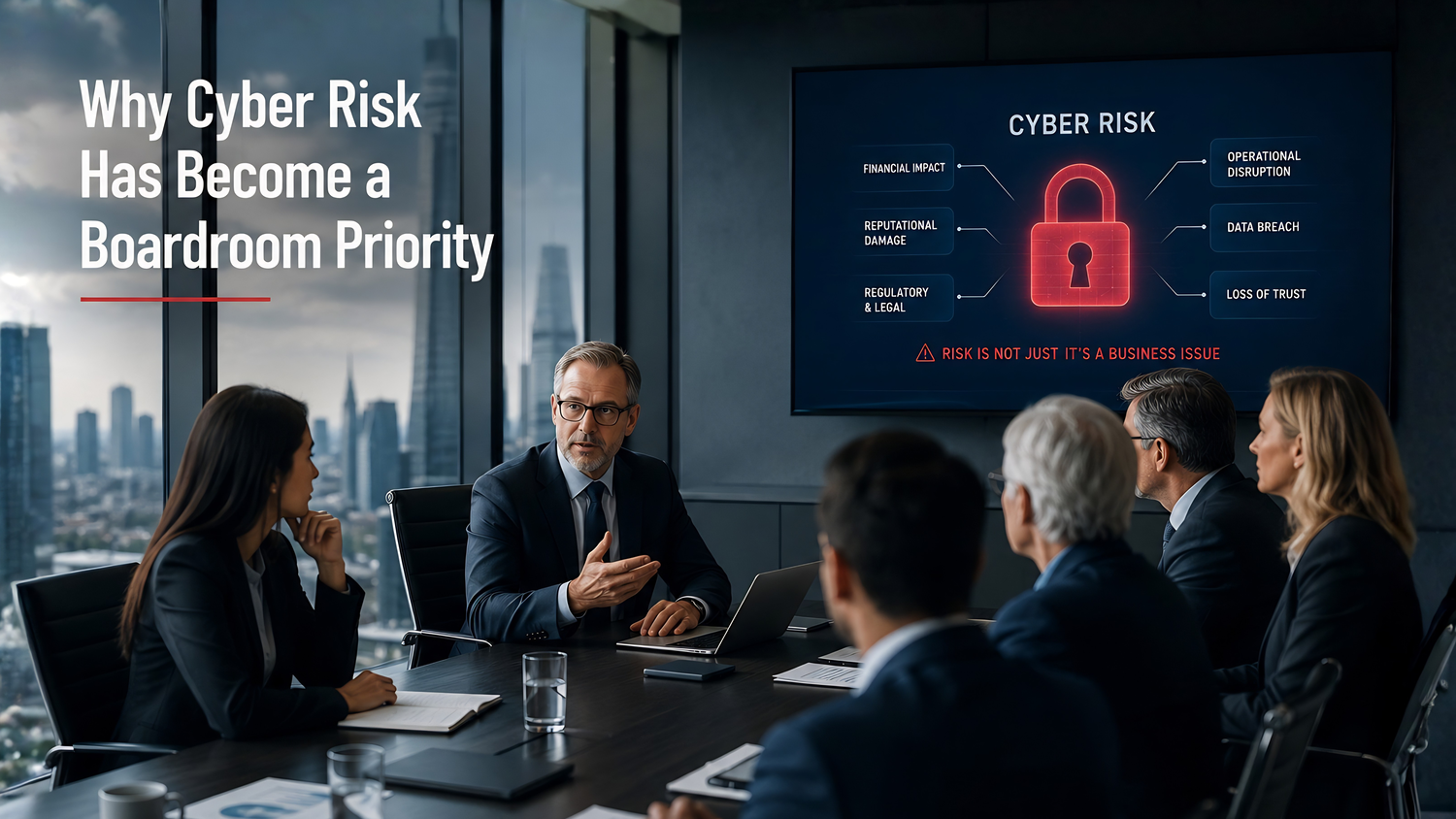
Over the past few years, cyber incidents have evolved in both scale and impact. What were once isolated data breaches are now capable of disrupting operations, halting supply chains, and exposing critical financial systems. For many organizations, the consequences extend far beyond IT recovery to include revenue loss, regulatory exposure, and reputational damage.
At the same time, the operating environment has become more complex. Rising uncertainty, increasing digital interdependence, and the expansion of third-party ecosystems have created a broader and more unpredictable risk landscape. Organizations are now exposed not only through their own systems, but also through vendors, service providers, and integrated platforms.
In addition, cyber risk is no longer confined to individual organizations. It is increasingly linked to broader national and infrastructure-level vulnerabilities. Periods of geopolitical tension are often accompanied by heightened cyber activity, including attempts to disrupt critical infrastructure, financial systems, and supply chains. For businesses, this creates an added layer of exposure, where risks can originate beyond their direct control and have cascading operational and financial implications.
This shift has fundamentally changed the nature of cyber risk. It is no longer a technical issue, but an enterprise risk that directly impacts business continuity and financial stability.
For boards and senior leadership teams, this carries clear implications. Cyber risk now sits alongside financial and operational risks, requiring the same level of oversight, accountability, and structured decision making.
However, many organizations are still not fully aligned with this reality.
While investments in cybersecurity tools have increased, governance frameworks have not always kept pace. In many cases, risks continue to be managed in silos, with limited visibility at the leadership level and unclear escalation pathways.
The gap is not technology. It is governance.
As a result, the conversation is shifting from prevention to resilience. Organizations are recognizing that while not all incidents can be avoided, their impact can be managed through stronger governance, clearer decision frameworks, and well-tested response mechanisms.
In this context, boards are increasingly expected to focus on a few critical areas:
- Integration of cyber risk into enterprise risk management
- Visibility of cyber risk at the leadership level
- Alignment between incident response and business continuity
- Oversight of third-party and supply chain risks
These are not technical questions. They are business and governance priorities.
Organizations that are better positioned in this environment are not necessarily those with the most advanced cybersecurity tools. They are the ones with clear accountability, strong governance structures, and the ability to make informed decisions under pressure.
Cyber resilience, therefore, is as much about leadership as it is about technology.
How MCA Gulf Can Support
MCA Gulf supports organizations in strengthening cybersecurity governance through risk advisory, systems audits, and business continuity alignment.
We help businesses assess cyber risk exposure, strengthen control frameworks, and enhance resilience across critical operations.
For further discussion, reach out to mcagrc@mcagulf.com