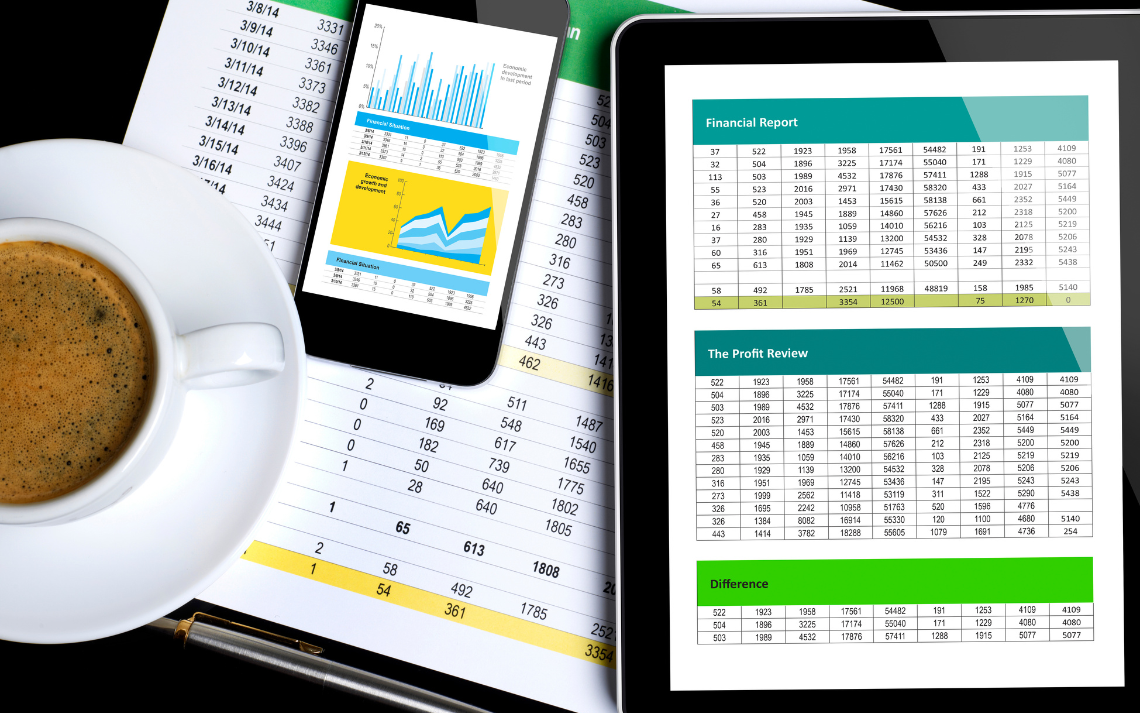

Financial reporting has changed dramatically over the past decade. There was a time when confidence in financial statements depended primarily on the accuracy of accounting records, reconciliations, and manual controls. Today, that confidence increasingly depends on the technology that processes, validates, and reports financial information.
Modern finance functions rely on ERP systems, automated workflows, system configurations, interfaces, and digital approval processes to execute thousands of transactions every day. Long before a finance team reviews a report or an auditor examines a transaction, technology has already determined how that information is processed. As organisations continue to digitise, confidence in financial reporting depends not only on people and processes, but also on the systems behind them.
A New Generation of Financial Risk
The nature of financial risk has evolved alongside technology.
Traditional financial assurance focused on accounting records, supporting documentation, and manual controls. While these remain important, many of today’s risks originate within the systems themselves. Configuration settings, automated approval workflows, tax engines, interfaces between applications, and system-generated reports all influence financial reporting without direct human intervention.
As a result, organisations can no longer rely solely on traditional financial reviews to gain assurance over the integrity of their financial information.
When Systems Fail Silently
One of the greatest challenges of technology-enabled financial reporting is that system failures are often invisible.
A change to a configuration, an interface that stops synchronising correctly, excessive user access, or an automated workflow operating differently from its intended design may continue unnoticed for weeks or even months. Because these failures occur within the technology environment, they may not be identified through routine finance processes or manual reconciliations.
The consequences can include inaccurate financial reporting, ineffective internal controls, segregation of duties conflicts, unauthorised transactions, and compliance deficiencies that only become apparent during an audit or regulatory review.
Why Assurance Must Evolve
As finance functions become increasingly technology-driven, assurance must evolve alongside them.
Organisations need confidence not only in financial results, but also in the systems producing those results. This requires evaluating automated controls, access governance, system configurations, change management, interfaces, and the reliability of system-generated reports areas that traditional financial reviews do not always cover comprehensively.
By extending assurance into the technology environment, organisations gain greater visibility over emerging risks while strengthening governance, financial reporting integrity, and operational resilience.
Building Digital Trust
Technology Assurance is no longer simply an IT exercise. It is becoming an essential component of financial governance.
For CFOs, Internal Audit teams, Risk & Compliance functions, and Boards, independent assurance over technology-enabled financial reporting provides greater confidence that financial information is complete, accurate, and supported by effective controls.
As organisations continue to invest in digital transformation, trust in financial reporting increasingly begins with trust in the systems that generate it.
How MCA Gulf Can Help
MCA Gulf provides independent Technology Assurance services designed to strengthen confidence in technology-enabled financial reporting. Our capabilities include ERP Assurance, IT General Controls (ITGC) Reviews, Automated Controls Assurance, Access Governance Reviews, Change Management Reviews, Interface and Integration Reviews, System-Generated Report Validation, and ICFR-aligned Technology Assurance.
Using globally recognised frameworks such as COBIT, COSO, ISO 27001, NIST, ITIL, SOX, and ISACA guidance, we help organisations evaluate the design and operating effectiveness of technology-enabled controls, strengthen governance, and improve the reliability of financial reporting.
To learn more about our services or arrange a working session, contact us at:
? mcagrc@mcagulf.com
? mcafam@mcagulf.com
Download the Guide
Download our Your Financial Statements Are Only as Reliable as the Systems Behind Them guide to explore how Technology Assurance helps organisations strengthen ERP reliability, improve financial reporting confidence, and build trust in the digital systems that underpin modern finance.